Wander through Lincoln’s Blackfoot Pathways: Sculpture in the Wild
Nestled in the picturesque town of Lincoln, Montana, lies a hidden gem that merges art and nature: Blackfoot Pathways: Sculpture in the Wild. This captivating sculpture park, founded by Kevin O’Dwyer in 2014, offers visitors a unique opportunity to explore artwork in a breathtaking natural setting.
What to Expect While Visiting Sculpture in the Wild
Sculpture in the Wild is a self-guided, wander-at-your-own-pace kind of place. Here’s what to know before you go:
- Admission: Free! If you’d like to support the park and its artist residencies, you’ll find donation boxes near the restrooms and entrance, or you can give online through Sculpture in the Wild’s website.
- Hours: Open year-round, seven days a week, from dawn to dusk.
- Accessibility and Dogs: The main loop is an easy 0.8 miles with almost no elevation change, and most of the park’s trails are wheelchair-accessible; a map near the entrance outlines which trails are wheelchair-accessible and which are not. In winter, expect packed snow on the paths. Leashed dogs are welcome.
- Time to Allow: Plan on 1 to 2 hours to see the sculptures at an easy pace. Give yourself extra time if you’re packing a picnic or catching a summer concert.
- Parking and Restrooms: On-site parking, restrooms, and a picnic area are all available. Restrooms may be locked in winter, so plan ahead during the snowy months.
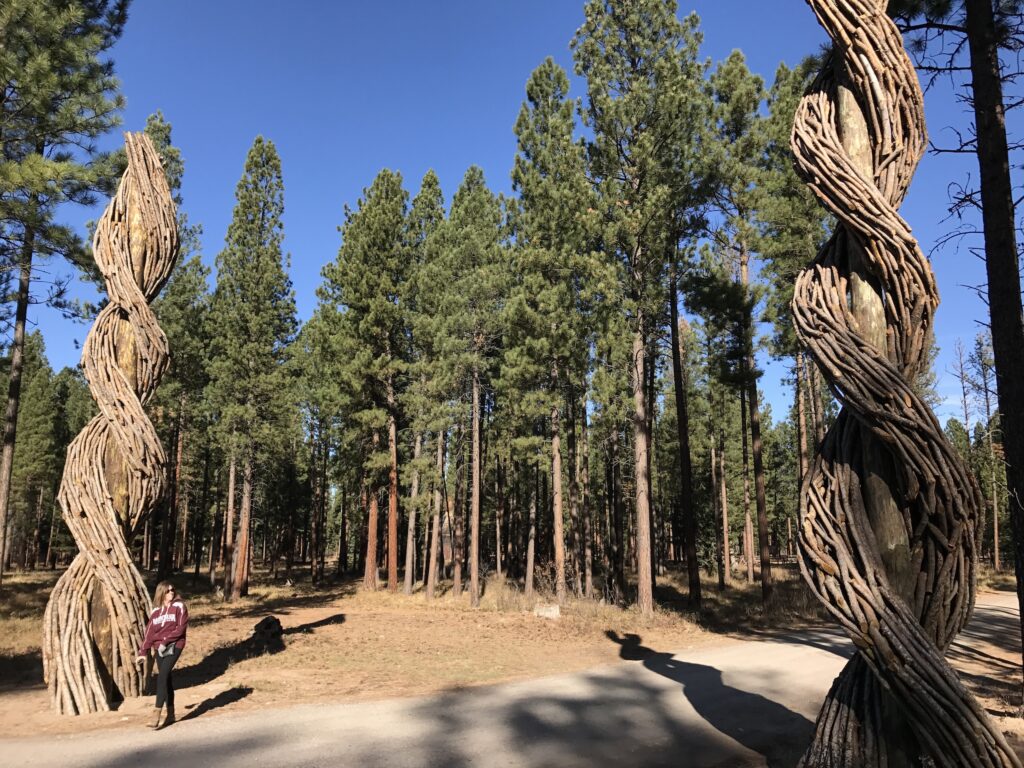
- Address: 1500 E MT Hwy 200, Lincoln, MT 59639. Look for the two large braided tree trunks marking the entrance just east of Lincoln
How Did an International Sculpture Park End Up in Lincoln, Montana?
Kevin O’Dwyer is an accomplished sculptor and visionary. He established the park to celebrate the intersection of art, nature, and the rich history of Montana’s Blackfoot Valley. This valley, once bustling with a historic logging industry, now serves as a backdrop for the park’s artistic expressions by international artists. The artists in residence pay homage to the region’s industrial past and natural beauty.
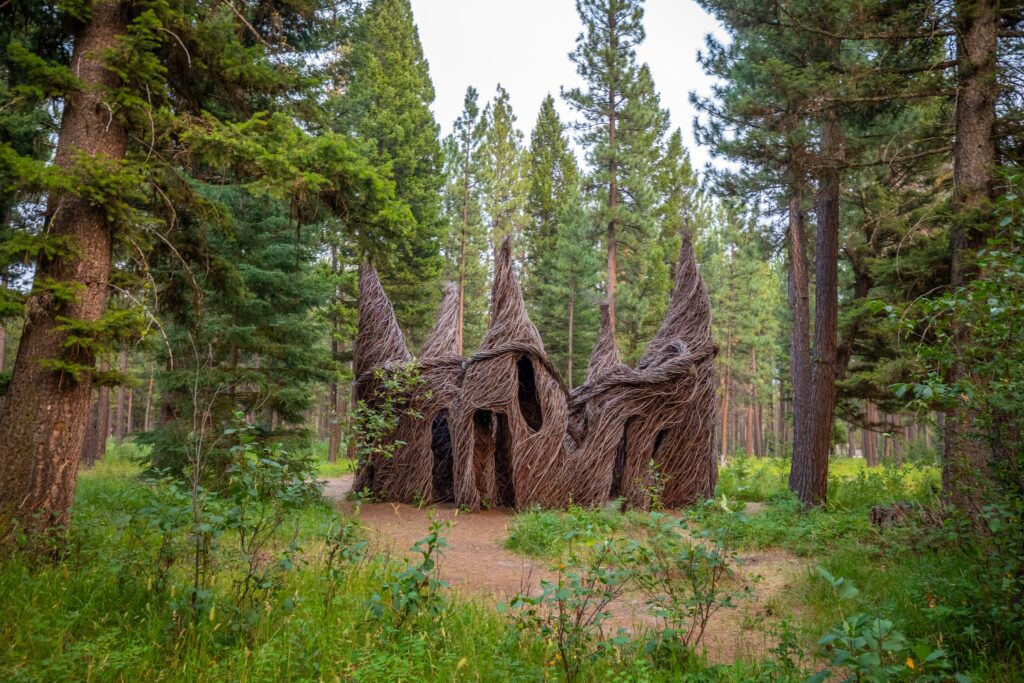
Sculpture in the Wild has continued to grow since its establishment. Each year, the park hosts new artists in residence, from established names to emerging talent, so the collection keeps evolving and no two visits look quite the same.
What You’ll See at Sculpture in the Wild
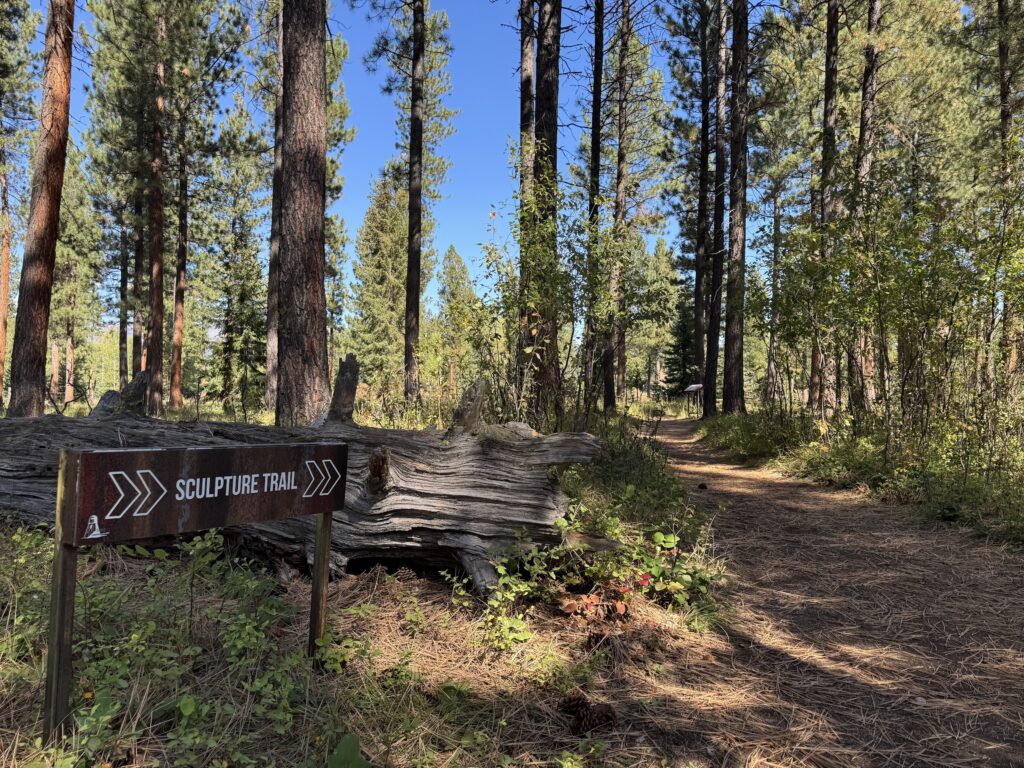
Upon arrival, there’s a large parking lot with bathrooms available and a picnic area, making it a perfect place to stretch your legs. From there, a panel shares the park’s story along with a few simple rules. Signs at the start point you toward specific sculptures, or you can simply wander, since the trails are well-marked.
Scattered throughout the park, you’ll find various sculptures, each with a plaque with information about the artist and how the work came together. Each piece of art has been thoughtfully placed to complement its surroundings, creating a blend of creativity and nature. The sculptures, crafted by renowned artists from around the world, vary in style, material, and size, ensuring a diverse and captivating experience for every visitor.
The peaceful atmosphere, combined with the awe-inspiring sculptures, encourages reflection and contemplation. Whether it’s a monumental steel structure rising against the sky or a delicate newspaper structure nestled along the curvature of the hill, each sculpture tells its own story and invites personal interpretation. Of the many works at Sculpture in the Wild, here are just a few that stood out as highlights to us:
Hill and Valley by Steven Siegel
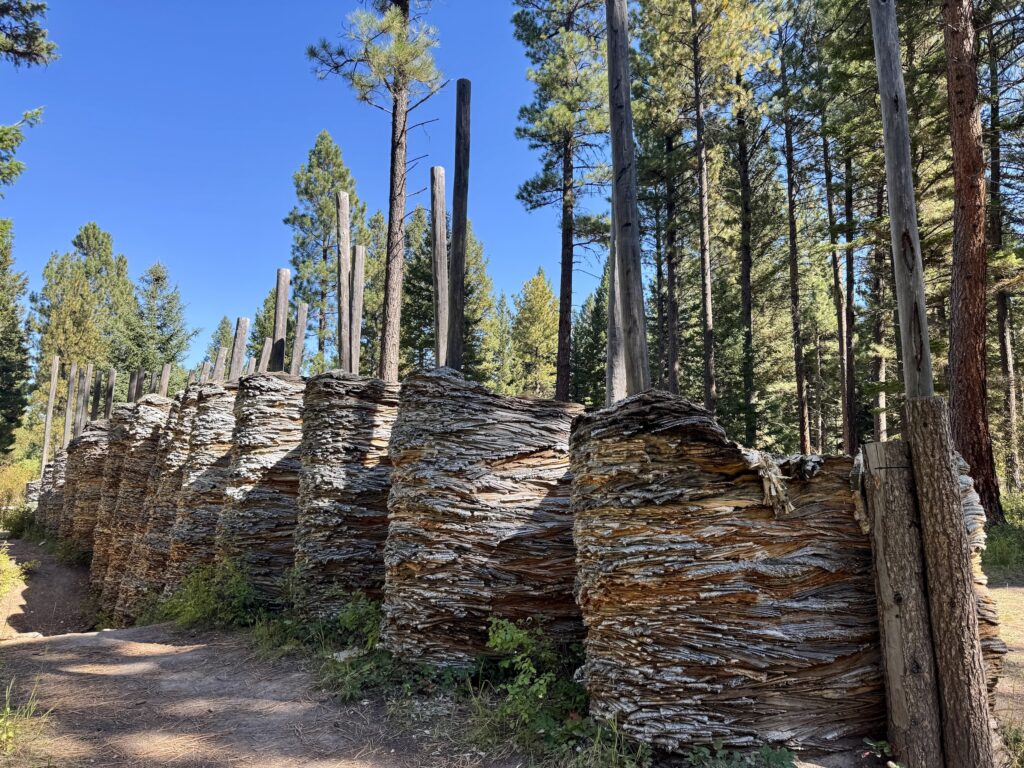
Speaking of that delicate newspaper structure nestled along the hill, this piece, aptly named Hill and Valley, was created by artist Steven Siegel in 2014. The layered textures catch visitors’ eyes before getting close to it. The sculpture is built from 30,000 pounds of newspaper and 400 pounds of nails, creating a wall that winds around 28 lodgepole poles.
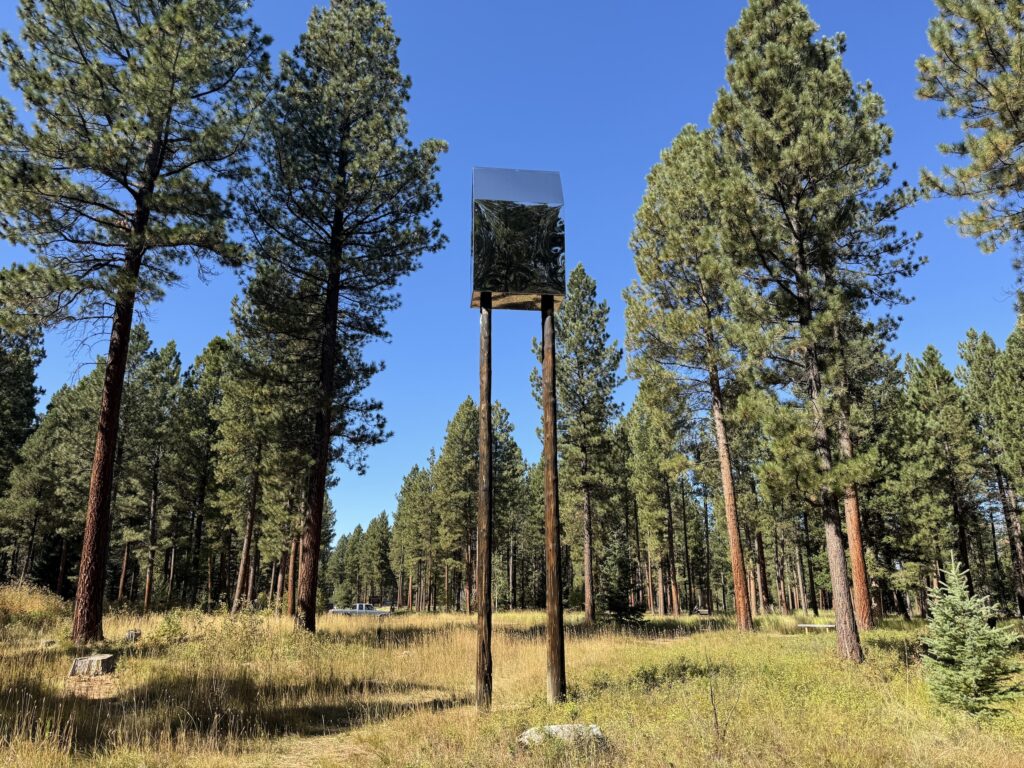
House of Sky by Alan Counihan
Irish artist Alan Counihan drew inspiration from “This House of Sky,” Ivan Doig’s acclaimed memoir of growing up in Montana ranch country to create his piece. If you haven’t read it yet, consider this your nudge to add it to the road trip reading list.
The Iconic Re-Imagining the Delaney Sawmill TeePee Burner by Kevin O’Dwyer and the Summer Concert Series
Long before it drew a crowd, the 75-foot TeePee Burner stood at the Delaney & Sons sawmill at Landers Fork, once the largest and most modern logging mill in the Upper Blackfoot Valley. At its peak in the mid-1960s, the mill kept more than 100 men working through the summer, and the burner ran around the clock, burning up wood refuse and casting an orange glow that locals still remember lighting up the night. When the mill closed in 1971, the machinery was hauled away, and the burner was left standing on its own.
In 2014, Kevin O’Dwyer proposed moving it into the sculpture park as a tribute to the valley’s logging heritage. Community volunteers helped rebuild its base, and by 2015 the burner had been reassembled and fitted with solar-powered LED lights that recreate the orange glow for a few hours each night. Step inside and you’ll find black-and-white archival photos printed on steel plates that tell the story of logging in the Upper Blackfoot. The project earned a Lewis and Clark Heritage Council Historic Preservation Award in 2019.
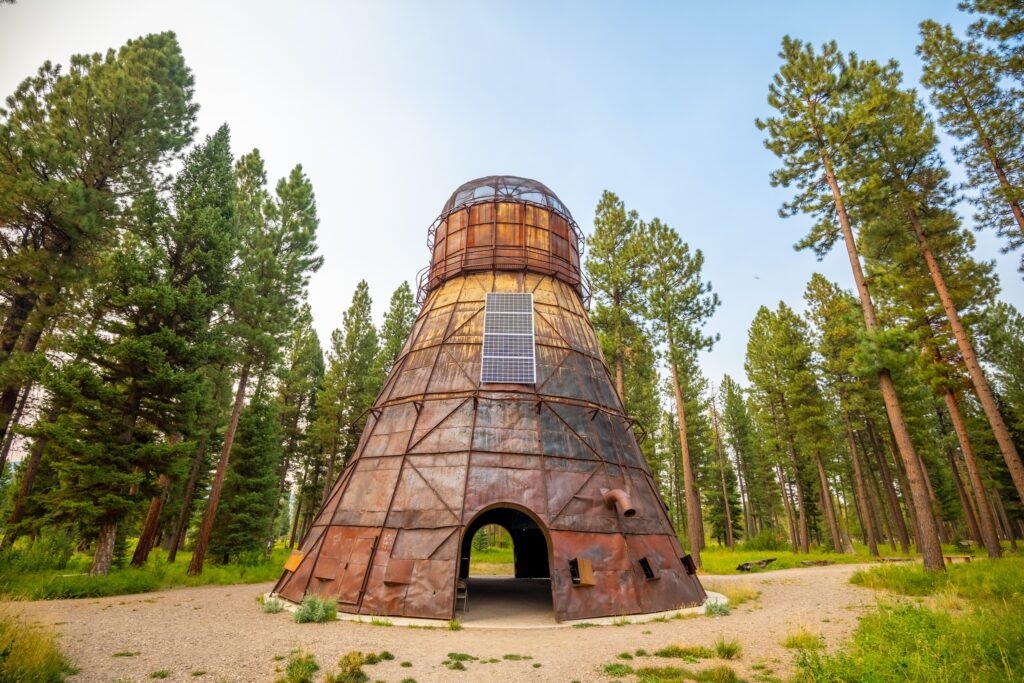
Today, that 45-foot-wide interior doubles as one of Montana’s more unexpected music venues. On Saturdays after the Fourth of July through Labor Day, the Music in the Wild summer series brings free live performances to the burner and the grounds around it. Come early to walk the trails, stay for the music, and check the Sculpture in the Wild events page for the most up-to-date event details.
Frequently Asked Questions
When’s the best time of year to visit Sculpture in the Wild?
The sculpture park is open year-round, dawn until dusk, even on major holidays! So really, any time is the best time to visit Sculpture in the Wild. Fall, winter, and spring will bring quieter trails than summer, but it’s always a peaceful experience. The only thing to note is to dress appropriately for the season.
Can kids climb on the sculptures?
It depends! Most sculptures are meant to be experienced up close, whether that’s walking through them, touching them, or even climbing on them. The sculptures that are not intended to be climbed on or interacted with physically are fenced off to discourage such interaction.
How far is Sculpture in the Wild from Helena and Missoula?
From Helena, Sculpture in the Wild is about 56 miles, or roughly an hour-long drive. Take Lincoln Road (Highway 279) north out of Helena and over Flesher Pass, then turn west onto Highway 200 toward Lincoln. The pass is the highlight of the drive, with switchbacks and sweeping valley views, so plan to stop at a pullout or two for photos. From Missoula, head east on Highway 200 for about 77 miles, or roughly an hour and a half. The park sits just east of Lincoln on Highway 200, so if you’re coming from Helena, you’ll reach Sculpture in the Wild before town, and if you’re coming from Missoula, you’ll find it just past the east edge of Lincoln. Flying in? Helena Regional Airport is about an hour away, and Missoula International is about an hour and a half.
Can I bring my dog to Sculpture in the Wild?
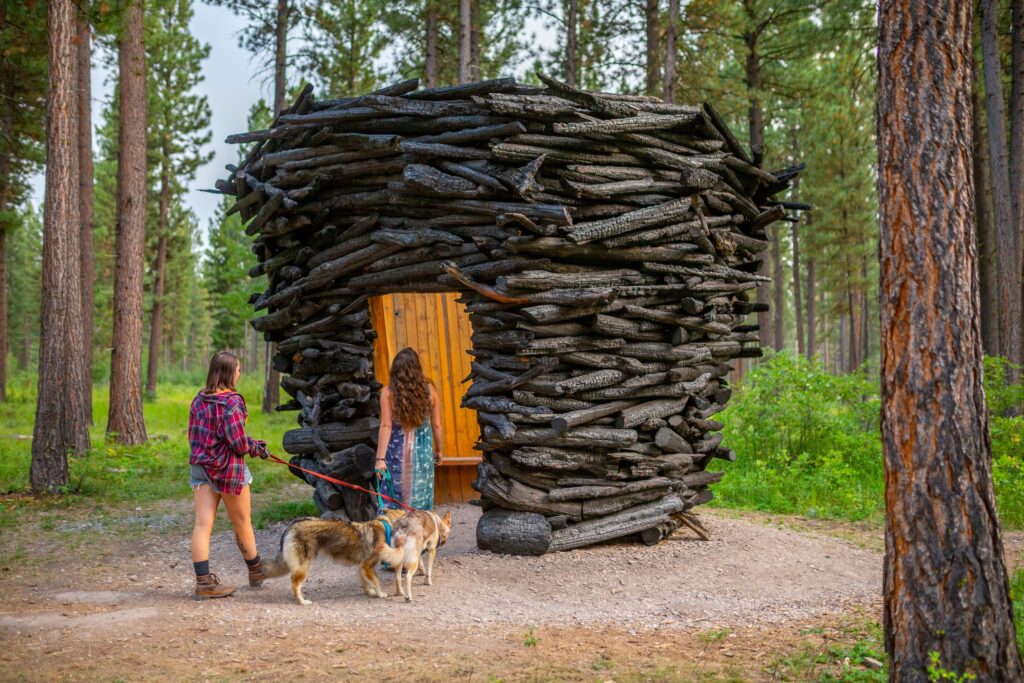
Yes! Dogs are welcome as long as they stay on a leash. The easy 0.8-mile loop makes a great stretch-your-legs stop for pups on a road trip. Keeping them leashed also protects the artwork and the wildlife you might meet along the way, since deer are known to browse the underbrush between the sculptures. Bring water, clean up after your dog, and enjoy the artwork.
See Sculpture in the Wild for Yourself
A visit to Sculpture in the Wild is an experience that nourishes both the soul and the senses. It’s a chance to immerse oneself in the beauty of nature while marveling at the power of human creativity. The park has become a must-visit destination along Highway 200 in Montana. Why not add this to your Montana itinerary and allow yourself to be enchanted by the creativity?