Philipsburg Montana
Community Overview
Located on the Pintler Veteran's Memorial Scenic Highway and more or less surrounded by the Beaverhead-Deerlodge National Forest, Philipsburg lives up to its picturesque surroundings.
Philipsburg began as a trading post and mining camp in 1866. The discovery of silver in the area, and the construction of the Hope Mill, Montana's first silver mill, ensured that Philipsburg would continue as a trading hub in the region. The town was named after Philip Deidesheimer, the engineer who designed the Hope Smelter. The region boomed during the late 1800s, and in addition to the painstakingly renovated National Historic Business District, be sure to visit the many ghost towns in the region to explore Montana's history. Granite Ghost Town State Park, once the richest silver mine on earth lies just to the east of Philipsburg. Don't have time to explore all the ghost towns in the area? Stop by the Ghost Town Hall of Fame in Philipsburg's Granite County Museum and Mine Exhibit. Get a taste of the thrill and rush of striking it rich while prospecting for sapphires at one of Philipsburg's sapphire mines. If you love the sapphires but aren't a big fan of the work, check out Philipsburg's unique jewelry stores.
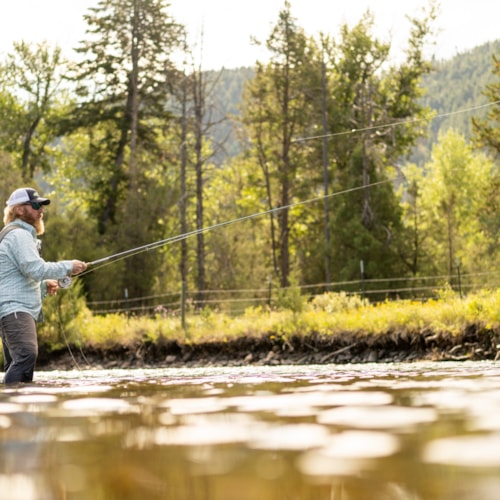
Outdoor enthusiasts can find something to do at Georgetown Lake, just ten miles south of town, whatever the season. In the summer months, enjoy the fishing, boating, and camping of Georgetown. The winter months find the lake spotted with the tents and huts of avid ice-fishermen. Or, speed down the slopes of nearby Discovery Ski Area. Camping, fishing, hiking, skiing, exploring ghost towns, visiting museums, prospecting for sapphires, and taking in live shows at Montana's oldest functioning Opera house are all excellent ways to spend your time in Philipsburg, but whatever else you do, be sure to stop by the famous Sweet Palace. With fudge, caramel, and taffy made in shop and over one thousand selections of candies, this premier Victorian candy emporium must be on everyone's list. Once a roaring mining camp, today Philipsburg, MT offers a treasure trove of events and activities.
Community Info
Philipsburg Elevation: 5,240'
Philipsburg Population: 841 (2020)
County: Granite
Philipsburg Chamber of Commerce Philipsburg City Website Gems, Ghost Towns & Georgetown Lake ItineraryIn the Philipsburg, MT Area:
Get Out and Explore.
Weather Forecast for Philipsburg MT:
63°
Partly CloudyPhilipsburg and Montana’s Flint Creek Valley – A Tale of Silver and Sapphires

In the 1860s, as large deposits of gold, silver, copper, and other valuable minerals were discovered in Granite County, many mining settlements sprung up along creek beds and mountainsides. As a reminder of that frenzied search for prosperity, today, 24 ghost towns are left scattered throughout the county. The town of Philipsburg, founded in 1867 and named for Peter Deiesheimer, is the lone survivor and remains intact and lively. The key to this longevity is an inherently beautiful location coupled with its inhabitants’ devotion to preserving and enhancing the area’s rich history.
The most renowned and profitable of the mining operations was located southeast of town, now home to Granite Ghost Town State Park. When the upper levels of the Granite Mountain mine were being developed, a massive silver deposit was found at about 200 feet of depth. Soon regarded as the greatest silver bonanza of its time, the mine went on to produce $20 million in silver between 1885 and 1893. Preserved at the state park are historic structures like the superintendent’s house and the ruins of the miners’ Union Hall.
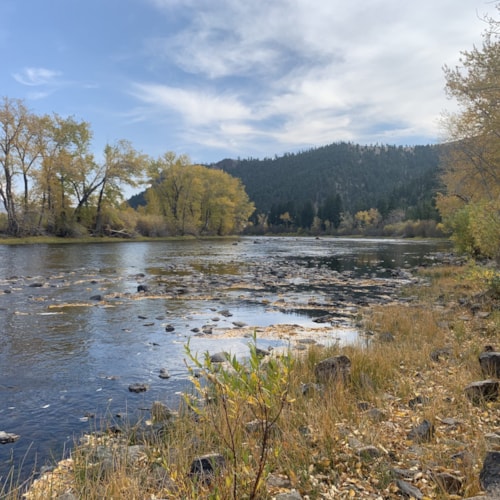
Silver wasn’t the only valued mineral that brought fortune-seekers to the Philipsburg area. Rock Creek—a major tributary of the Clark Fork River— flows along the nearby Sapphire Mountains, named for the prized blue gemstone found in the creek in 1892. At the Gem Mountain Mine southwest of town, small round sapphires were initially sought after and shipped to Switzerland where they were used as watch bearings. While the emergence of synthetic sapphires had significantly slowed sapphire mining operations by the 1930s, Gem Mountain remains active and has rebranded itself, providing travelers with a chance to try their hand at sifting through gravel to find blue, mint green, yellow, orange, red, and pink treasures.
The heart of Philipsburg evokes a scene from the old west that has been given a vibrant new paint job. Informational plaques detailing the previous uses of various buildings give insight into what a boom town it once was… everything from a ballroom to a basketball court to a masonic temple, grand hotel, opera house, and general store. Everywhere you turn is a reminder of how much the world has changed around these storefronts. Most of the buildings have seen occupants come and go, but the Philipsburg Theatre, founded in 1891, still hosts a variety of live entertainment to this day. Having stood the test of time and served the community through thick and thin, it has earned the title of the oldest continually operating theatre in Montana.
While some who travel to Philipsburg come for the architecture, immersive museums, and ghost towns, still others come seeking recreation and mountainous thrills. Just a few miles down the road is Georgetown Lake, a reservoir of Flint Creek with several beaches and campsites managed by the US Forest Service. With the backdrop of the Anaconda Range to the east, Georgetown Lake is a great place to beat the summer heat and gaze at mountain peaks. On the opposite side is Discovery Mountain, a ski hill that offers lift-access mountain biking in the summer months. Its slopes are seen looming over town to the southeast, and evening conversations at the Phillipsburg Brewery often consist of pedalling down flow trails or gliding through tree runs, depending on the season.

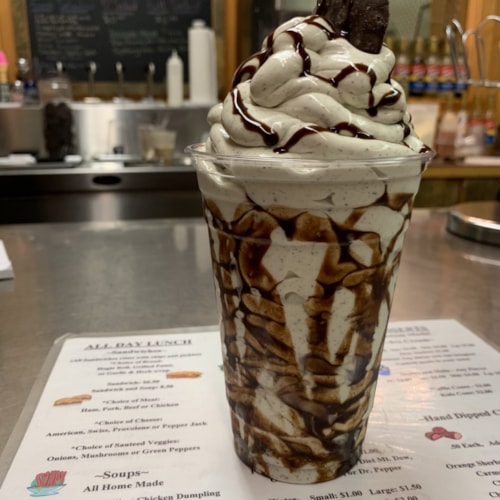
The mining boom that put Philipsburg on the map is long over and tourism has been adopted as the new means of supporting the local economy. The main drag on Broadway Street with its colorful Victorian “Painted Lady” architecture features museums, a library, gem stores, a quilt shop, a bakery, a sweet shop, ice cream stores, several pubs, a craft brewery, cafes, a motel and an RV Park. One of downtown’s attractions is the Law Enforcement Museum, where old Granite County booking records and police gear are kept, including an actual cell extracted from the defunct Anaconda prison.
Although Philipsburg may not be on the top of every typical tourist’s list, those looking for a more immersive Montana experience will not be disappointed by the small-town charm that it has to offer. The town’s placement roughly between Yellowstone and Glacier National Parks makes it a viable option for people looking to get off the beaten path and dive deeper into the region’s history, inspiring scenery, and endless opportunities for outdoor recreation.