
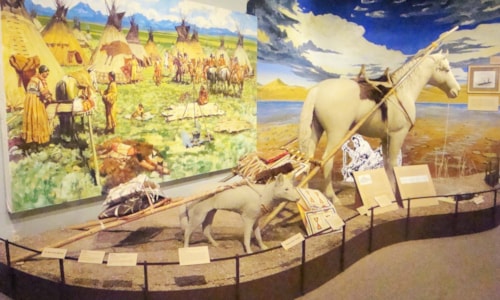


Southwest Montana: Where History Lives
Leaving the geysers of Yellowstone National Park behind us, my husband, grandchildren and I drove into the southwest corner of Montana. We were on our way to Glacier National Park but had a few days to spare, and my husband was determined to keep us off the freeway as much as possible. It was on this leg of our trip that we discovered the soul of Montana. Away from the crowds of the national parks, we found Southwest Montana and its personalities, places and landscapes that shaped the culture and history of this great state.
This is the region where Montana got its start, where its first and second territorial capitals and, ultimately, its state capital were established, where old mining towns boomed and collapsed, where Lewis and Clark ventured and where Native Americans and cowboys roamed.
In Ennis an old cowboy at the Ennis Cafe suggested we head west on Highway 287 to neighboring Virginia City and Nevada City. He thought our two young grandsons would get a kick out of exploring the Old West ghost towns. Well, Hank couldn’t have suggested anything better.
In May 1863, gold was discovered in Alder Creek by six prospectors. Word quickly spread, and the towns of Virginia City and Nevada City sprang up virtually overnight, swelling to 10,000 residents within just three months. In those first three months of operation, $30 million in gold was extracted (that is half a billion in U.S. dollars today), making it one of the richest placer gold strikes in history. Virginia City was named Montana’s second territorial capital (Bannack, now a state park, was the first), and the towns now feature America’s finest collection of 1860s “boom town” buildings — more than any other town in the West — and vast collections of Old West artifacts.
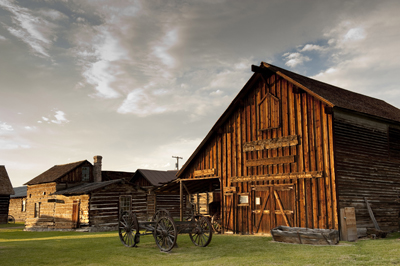
Our grandsons ran through the Nevada City Museum — an open-air collection of 90 preserved 1860s buildings, including a saloon (where they played cards with Whiskey Joe, a living history actor with a canteen full of iced tea), blacksmith, schoolhouse and much more. At night we took a Lantern Tour of the grounds and learned more about the Alder Gulch gold strike and the characters that came and went, including the vigilantes who tried to enforce order in the often rough and lawless Montana Territory.
We spent that night at the Fairweather Inn in Virginia City two miles down the road, then spent the day strolling this living ghost town’s wooden boardwalk and peeking into false front buildings filled with collections of frontier and mining life. We hopped on a converted 1941 fire truck for a narrated historical excursion through the town and up to the gravestones of the town’s most infamous outlaws on Boot Hill — atop which offers a fantastic view of the narrow valley. At the Opera House our grandsons experienced their first vaudeville show, which was received with lots of giggles, and the next morning we ate breakfast at the delicious Star Bakery before heading out.
We decided that this was an opportune time to introduce our grandsons to the legacy of two men whose journey more than 200 years ago unlocked the undiscovered West. In Southwest Montana the Lewis and Clark Expedition in August 1805 followed the Jefferson and Beaverhead rivers through the Dillon area. The Corps of Discovery’s successful and peaceful journey through the region would not have been possible without their interpreter and guide Sacajawea, a young Indian woman whose relatives helped the expedition secure horses in the area for their trek across the Rocky Mountains to the Pacific Ocean.
We drove 45 miles, first northwest along Hwy. 287 and then southwest along Hwy. 41 to Beaverhead Rock State Park. As we approached we had the boys on the lookout for a beaver’s head. They didn’t anticipate that what we would find was actually a huge rock formation resembling a beaver’s head in water. It was here that Sacajawea recognized this natural landmark as the nearby summer grounds of her relatives, the Lehmi Shoshones. From here she was able to lead the corps to meet the friendly natives.
We continued south another 15 miles to a limestone outcrop just north of Dillon, known as Clark’s Lookout. Here we stood looking over the panoramic vista above the Beaverhead Valley from right where Captain Clark took compass readings (five days after Sacajawea identified Beaverhead Rock). The state park’s interpretive signs helped us explain to the boys the navigational methods used at the time, and a monument shows the three compass readings Clark took that day.
Our last history lesson of the day was at the Big Hole National Battlefield, 75 miles northwest of Dillon. Here our grandsons learned that Native American / white encounters in the years after the Lewis and Clark Expedition were often not peaceful. The battlefield memorial stands today as commemoration of the brave men and women who fought and died here in August 1877, during the battle between the Nez Perce and the U.S. Calvary. The historic site features a visitor center with artifacts and hands-on displays. We took the self-guided tour of the battlefield and visited the deeply moving teepee memorial along the Big Hole River. Our youngest grandson quietly took my hand as we stood with the teepees, sensing that something very somber had happened here.
We needed to get the boys’ spirits up and decided that an evening swim at Fairmont Hot Springs (90 miles northeast near Anaconda) was the thing to do. After soaking in the relaxing, mineral-rich waters and a good night’s rest, we were all ready for our next historic adventure in the city of Butte.
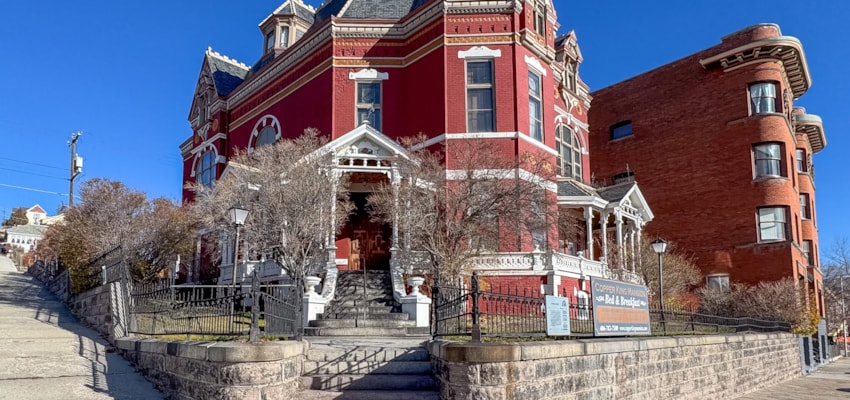
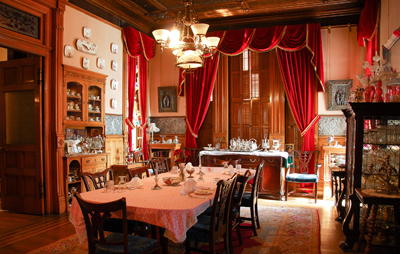
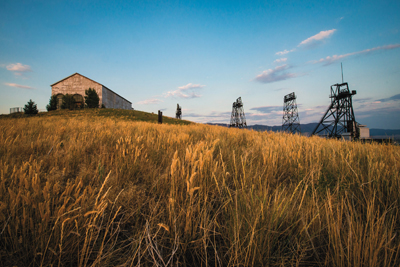
In Uptown Butte, we got an in-depth history of the Copper Kings in our tour of the Copper King Mansion, built by William A. Clark and doubling today as a museum and bed and breakfast. It’s no surprise that the city, whose copper mines once produced half the country’s supply, was called “The Richest Hill on Earth.” After our mansion tour, we hopped on board the Butte Trolley with Butte-classic Pork Chop John sandwiches in hand. While driving around Uptown we learned of all the characters, famous folk, miners and scoundrels who called the mining boom town home. In the afternoon the boys were ready for some outdoor exploration, so we drove north 40 miles on Interstate 90 to the historic Grant-Kohrs Ranch in Deer Lodge.
In the 1800s the West was changing quickly as miners and frontiersmen increased settlement. In the fertile valleys of Southwest Montana cattlemen found prime grazing land. Near Deer Lodge cattle baron Conrad Kohrs established a 10-million-acre cattle empire that was started by Johnny Grant in 1862 and purchased by Kohrs four years later. Today the Grant-Kohrs Ranch National Historic Site is managed by the National Park Service and remains a working cattle ranch. We strolled through the beautifully preserved grounds and toured the original ranch house, and the boys relished trying their hands at roping (with the help of the friendly park ranger).
We decided we couldn’t leave Southwest Montana without visiting Montana’s capital city of Helena. So, after playing at the ranch, we drove 60 miles on to Helena and spent the night at the Great Northern Hotel in the same complex as the Great Northern Carousel — much to the boys’ delight.
We spent the next day learning about Helena’s golden history. Originally the site of Last Chance Gulch, Helena would prove to hold the second largest placer gold deposit in Montana and one that would create a lasting, vibrant community. By 1875 Helena had grown into a cosmopolitan city and became Montana’s third territorial capital, and in 1894 it became the capital of the new state of Montana.
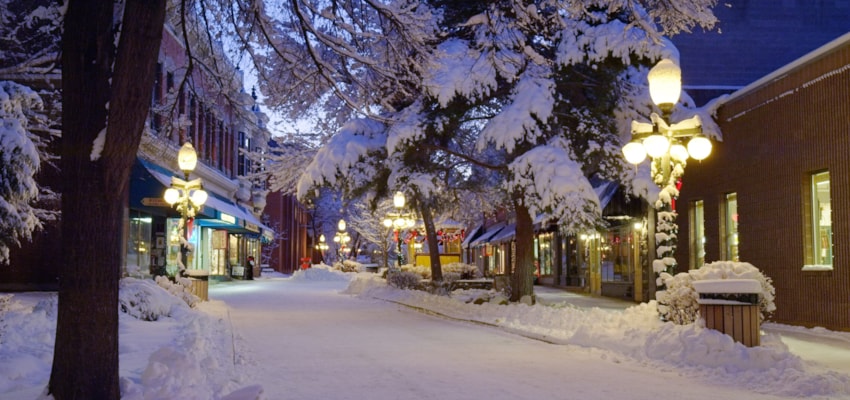
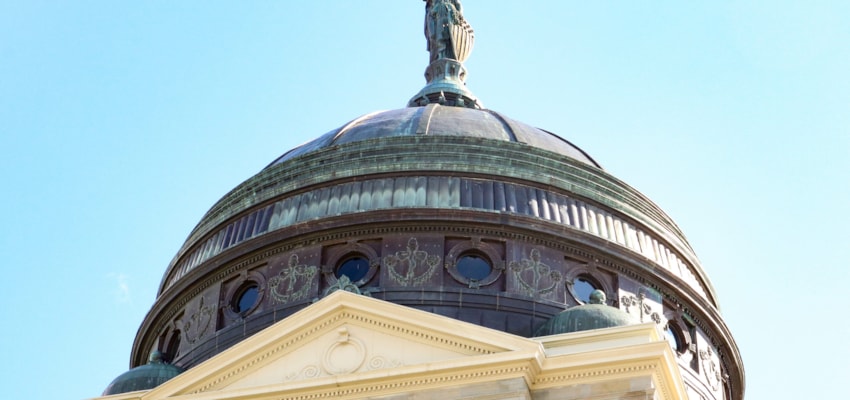
To experience the capital city we stepped aboard the Last Chance Tour Train. The one-hour ride took us by the original Governor’s Mansion, the current executive residence, the grand Montana Capitol, the historic Guardian of the Gulch and much more. We then strolled down Last Chance Gulch, which today is an outdoor walking mall filled with shops and restaurants. The boys’ favorite was a stop at a Helena staple since 1922, the Parrot Confectionary, for ice cream sundaes. Helena was certainly the cherry on top of our historic tour of Southwest Montana.
There are places shaped by history and then there are places alive with history. Southwest Montana offered an experience for us old baby boomers and our young grandsons to experience together hands-on living history that was equally enlightening and entertaining — what better history lesson could we ask for?