
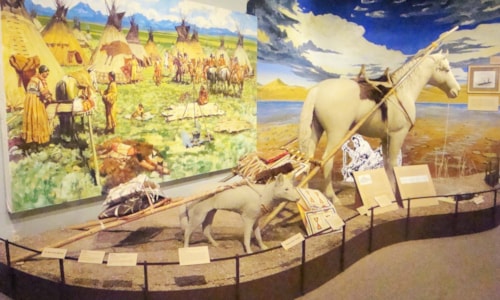


The Gates of the Mountains
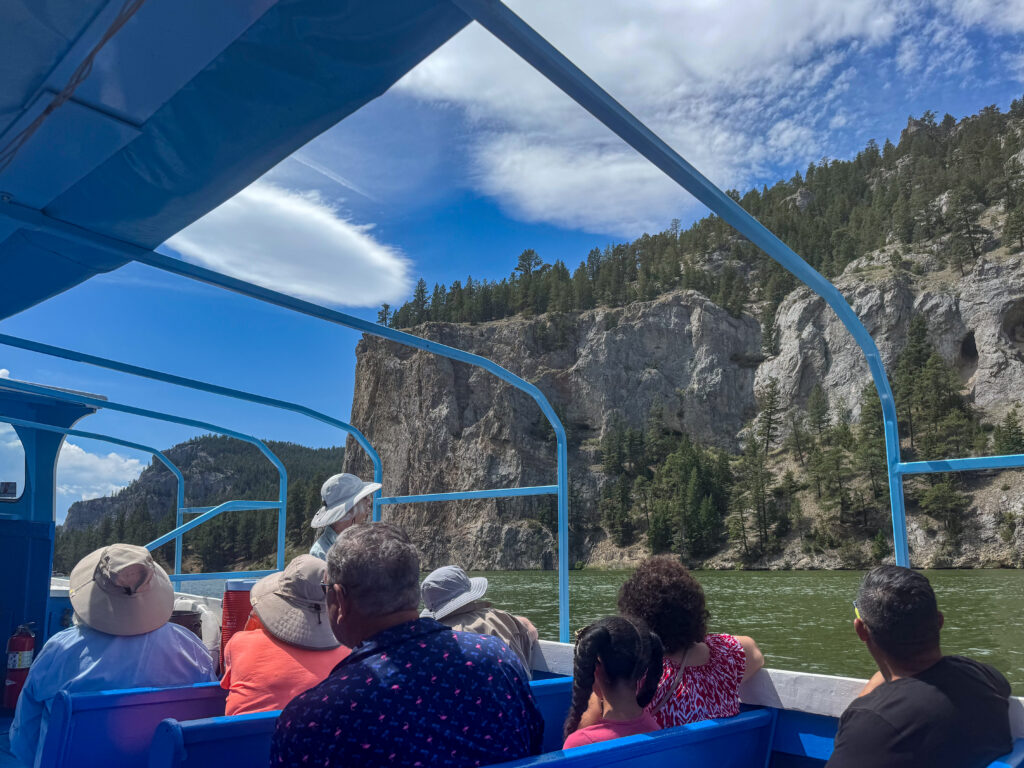
Towering limestone cliffs. Bald eagles soaring overhead. The steady ripple of water beneath your feet. Just 20 miles north of Helena, the Gates of the Mountains boat tour offers an unforgettable two-hour journey through one of Montana’s most iconic landscapes — a canyon so dramatic, Meriwether Lewis himself named it.
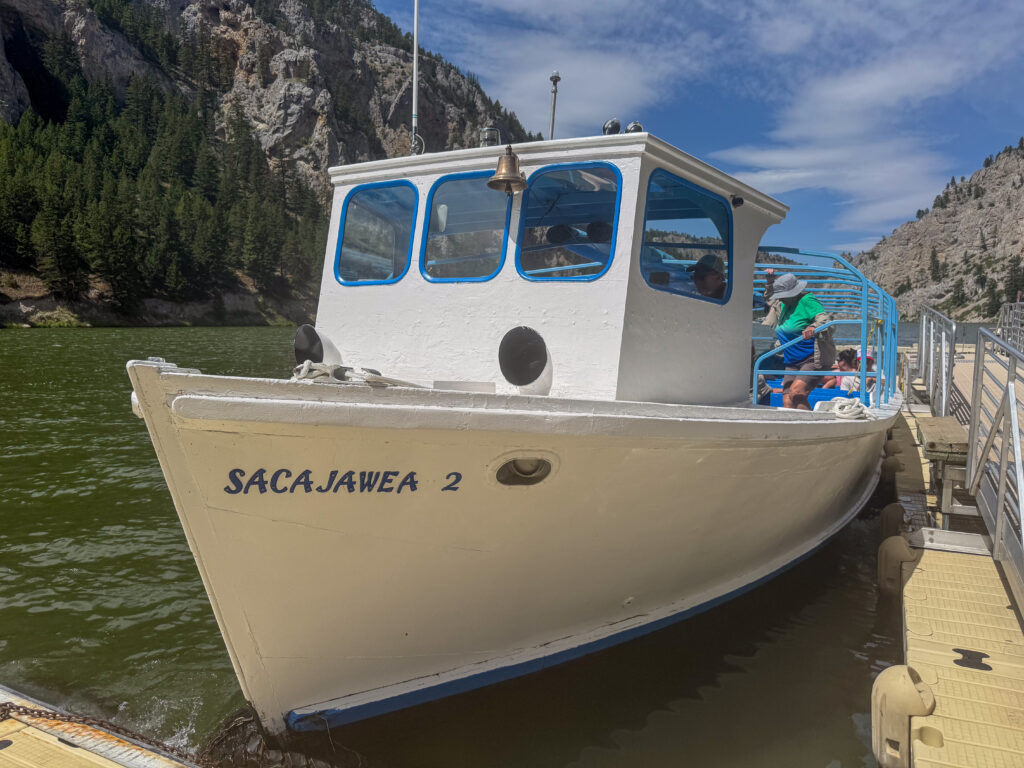
Now celebrating its 139th season, this legendary tour has been running longer than Montana has been a state. With stories that stretch from the Lewis and Clark Expedition to one of the world’s most studied wildfires, there’s no better way to experience the Missouri River Canyon than by a tour aboard the Sacagawea II.
A Journey Through the Eyes of Lewis & Clark
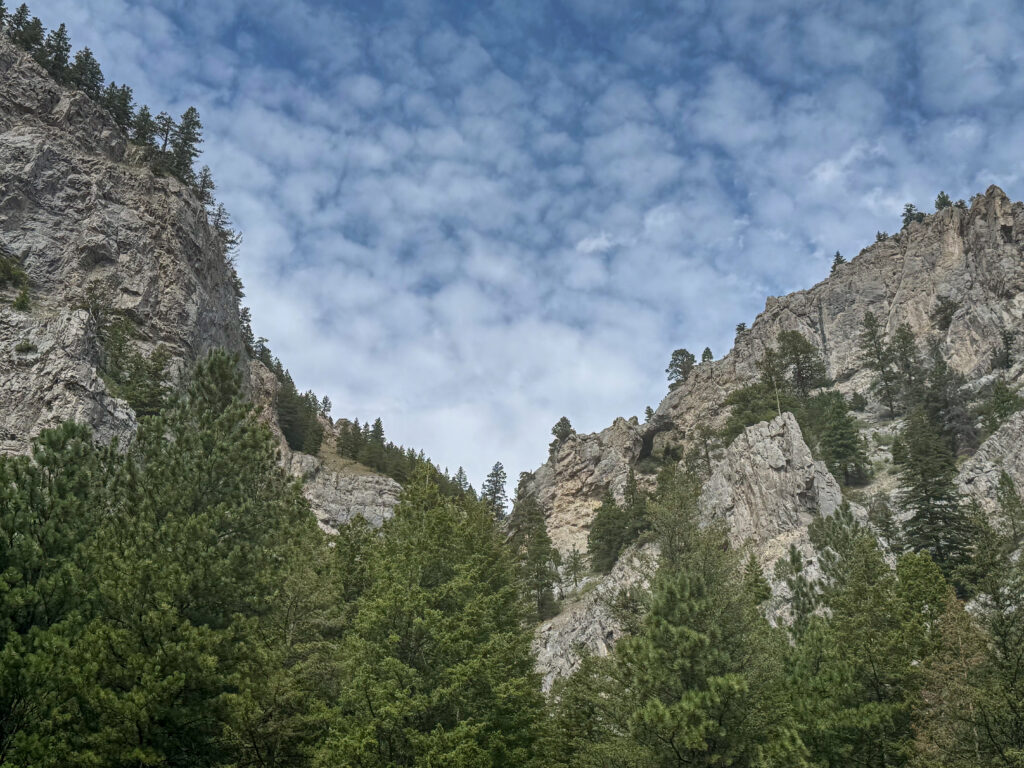
On July 19, 1805, Meriwether Lewis recorded a journal entry that forever named this section of the Missouri River. He described “the most remarkable clifts that we have yet seen,” where 1,200-foot limestone walls rose straight from the water. The sheer rock faces, casting dramatic shadows over the narrow canyon, made the expedition members feel as though the cliffs might tumble in on them at any moment:
“These clifts rise from the water’s edge on either side perpendicularly to the height of 1200 feet. Every object here wears a dark and gloomy aspect. The tow[er]ing and projecting rocks in many places seem ready to tumble on us… from the singular appearance of this place I called it the gates of the rocky mountains.”
Today, you can cruise the same waterway that left Lewis in awe, watching for bald eagles, bighorn sheep, and the hidden stories carved into the canyon walls themselves.
139 Seasons and Counting
Long before tourism was common in the American West, Nicolaus Hilger had an idea. He came to Montana chasing mining dreams but soon found more success as a rancher. As he settled into life at the Hilger Hereford Ranch along the Missouri River, he saw potential in the winding waterway — perhaps it could serve as a route to move freight and passengers north to Great Falls.
The first trip downstream took only 12 hours. The return trip? A grueling 14-day struggle against the current that nearly cost him the boat. So Hilger pivoted. In 1886, he launched the Rose of Helena — not as a freighter, but as a scenic tour vessel. A scenic tour was rare in those days, but knowing that boat was the only means to see the towering canyon, Hilger thought why not?
Today, if you look closely near the marina, you can still see remnants of that original boat. It’s a quiet tribute to a Montana tradition that’s been running for nearly a century and a half.
A Quick Look at the Fleet
Three vessels make up the Gates of the Mountains fleet today, each offering a slightly different experience:
- Sacagawea II: A 50-foot open-air wooden boat with cushioned benches
- Canyon Voyager: A 60-foot aluminum boat with an indoor cabin, restroom, and open-air rear deck
- Hilger Rose: A 42-foot fiberglass vessel, ideal for smaller groups though run less frequently
Tours of the Gates of the Mountains generally run from mid-May through mid-September, and last approximately two hours. Advance booking is available online. Same-day tickets when available by phone or in person only.
Echoes of Fire: The Mann Gulch Tragedy
North of the canyon lies Mann Gulch, the site of one of the most tragic and transformative wildfires in U.S. history. On August 5, 1949, 15 smokejumpers were on the ground, and 13 would lose their lives when shifting winds turned a small fire into an unstoppable blaze.
The disaster changed the way wildfires are understood and fought worldwide. It’s the subject of Norman Maclean’s acclaimed book Young Men and Fire and James Keelaghan’s haunting ballad Cold Missouri Waters.
“There was no way down, headed for the ridge instead. Too big to fight it, we’d have to fight that slope instead. Flames one step behind above the cold Missouri waters … two hundred yards to safety, death was fifty yards behind.”
As your boat drifts past the gulch’s mouth, you’ll feel the gravity of this place — a sobering reminder of nature’s power and the courage of those who face it.
Ancient Art, Still Alive in Stone
Long before Lewis and Clark, the Missouri River was a vital waterway for Native peoples — and the Gates of the Mountains was already a place of spiritual and cultural meaning.
On at least four canyon walls, you’ll find red-orange pictographs of animals and human figures — more than 125 individual images, some dating to around 640 AD. These sites weren’t used as shelters, which means they were likely chosen for ceremonial or symbolic reasons. The artwork features different styles, paint types, and application techniques, suggesting that these cliff faces were interactive — evolving “art walls” where generations of people left their mark.
As we traveled down the canyon, our captain and guide noted these pictographs looking to one image to show eight hashmarks, a bison, and a cross. As a possible explanation, if you were to take off on foot from that point it would take roughly eight days to reach the site we know today as the First Peoples’ Buffalo Jump in Ulm, Montana. It’s one of the largest buffalo jump sites in North America. This possibility was brought to the guide by an Elder, and while we may never be certain, “who offers it and how it plays out, makes it plausible.”
There’s something awe-inspiring about seeing this ancient art in place. It’s a vivid reminder of how long this land has been loved, lived in, and unchanged.
What You’ll See on the Tour
The Gates of the Mountains isn’t just beautiful, it’s full of wonder and wildness. As you tour the canyon, keep your eyes open for:
- Towering limestone cliffs, shaped by millions of years of geologic history
- Bald eagles and their nests, bighorn sheep, and other wildlife
- Pictograph sites carved and painted into canyon walls
- Mann Gulch, visible from the water and woven into modern firefighting history
- Coulter Campground which is a great overnight base for exploring the area and most easily accessed from the water
The wilderness area east of the river covers just under 30,000 acres, making it Montana’s smallest official Wilderness Area. But with over 53 miles of trails, it offers endless opportunities for day hikes, weekend backpacking, and true solitude — no motorized vehicles allowed.
The land west of the river is privately held by ranches, nearly all of it residing in a conservation easement.
On either end of the canyon, Upper Holter Lake and Holter Lake offer even more ways to play, from paddleboarding and swimming to fishing and camping.
Step Into the Story of the Missouri
Whether you’re a history buff, a wildlife lover, or just looking to soak up the peace of a river canyon, the Gates of the Mountains boat tour delivers. It’s a journey through time, a moment of wonder, and a Montana tradition nearly 140 years strong.
Come see what left Lewis in awe and what still stuns travelers today.
His bride stands guard at ancient gates
Is Montana Hiding a Million Dollar Treasure? Clues Point to Big Sky Country
Read Blog Post