Augusta Montana
Community Overview
The waving prairie grasses at the foot of the Rocky Mountain Front lured cattlemen to the Augusta region early on. Today, Augusta remains a community embedded in cow town life. A visit to Augusta through most of the year will feature relaxation in the simple rhythms of ranch town life, but during the annual American Legion Rodeo, Augusta becomes a flurry of activity, the town bursting at the seams as people from all over flock to the "Wildest One Day Show on Earth."
Augusta sits in the midst of spectacular scenery. To the east, the earth stretches out in miles of undulating prairie grass. To the west the earth rears skyward along the rugged Rocky Mountain Front, and Augusta is perfectly situated as a gateway to the sprawling Bob Marshall Wilderness Complex. The complex includes the Great Bear, Bob Marshall, and Scapegoat Wilderness areas, remote and virtually untouched. Each summer backpackers, hikers, and horseback riders assemble in Augusta to explore the one and one half million acres of pristine mountain beauty.
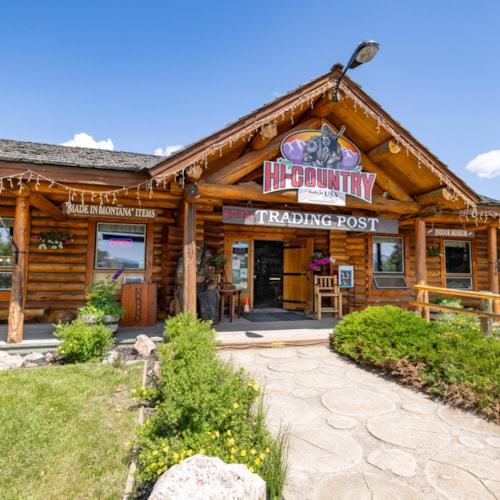
With gift shops, lodging, and a number of delicious places to eat, Augusta perfectly combines natural beauty with Montana hospitality.
Community Info
Augusta Elevation: 4,075'
Augusta Population: 316 (2020)
County: Lewis & Clark
Augusta Area Chamber of Commerce Scapegoat Wilderness Complex West Yellowstone to Augusta ItineraryIn the Augusta, MT Area:
Get Out and Explore.
Gateway to the Bob Marshall Wilderness Augusta, Montana
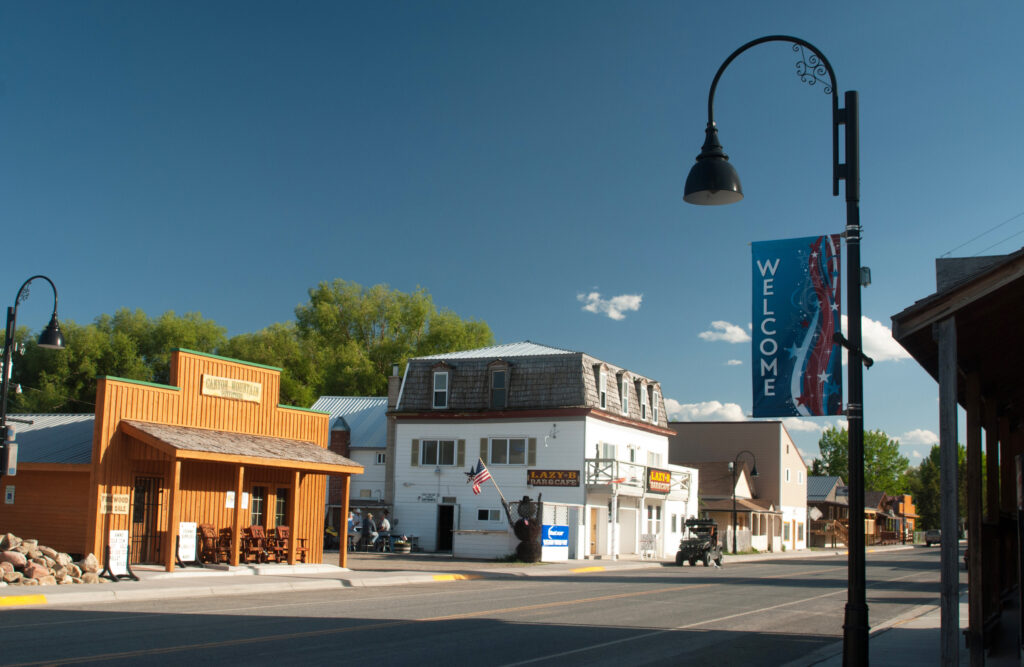
This northern Lewis and Clark County community is defined by the spectacular Rocky Mountain Front and the vast range of rolling prairie leading west towards the abrupt beginnings of the Northern Rockies and-the wildlands beyond. Ranching, wildlife, and outdoor recreation are the catalysts that make the town work.
Typically, most of the ranches in these parts have multi-generational ownership; and many who came to the region in the 1930s, first worked for large ranchers before establishing their own places.
Augusta is part of the big Sun River country. Meriwether Lewis of the Lewis and Clark Expedition passed through in 1806. The Blackfeet Indians they encountered called the Sun, Medicine River, owing to the medicinal deposits and hot springs found several miles upriver from where it pours out of the mountains.
Cattle began appearing in 1862 during the open range days. Historical accounts report at one time, about 42,000 head were grazing near the future townsite of Augusta.
While the cattle operations hold sway today, there was a period when almost 70,000 sheep grazed the area. This business began dying out in the late 1940s.
In 1871, the Augusta township was surveyed, but it wasn’t until 1883 that Phil Mannix built the first post office and store. He was named postmaster in June of 1884. The most accepted version of the origin of the towns name is that Augusta Hogan was the first white child born here and the settlement was given his moniker.
By 1901, Augusta was well established as an agricultural center. Then in April of that year, a disastrous fire broke out and within a short period of time the entire business section burned to the ground. The Lewis and Clark County News stated, “the fire occurred on Thursday, and some said that on Friday, Augusta became the most moral town in the state, having three churches and no standing saloons or dance halls.”
Between 1914 and the early 1920s, during the height of the homestead era, Augusta reached its population and commercial peak.

The Bureau of Reclamation played a major role in helping intensify agriculture in the Sun River region. In 1908 the agency constructed the Willow Creek Reservoir and sometime after 1915, the Pishkin Reservoir was built. The largest project, Gibson Dam, holding back the Sun River, was completed in 1929.
These man-made lakes, along with the creation of the Bob Marshall Wilderness in August of 1940, and the establishment of the Sun River Game Range and Wildlife Management Area in 1947, have aided in making the Augusta region a recreation hunting and fishing mecca. Trails heading up the various forks of the Sun River, Elk Creek, and the Dearborn River, lead into the Scapegoat and Bob Marshall Wilderness areas. Many dude ranches and outfitters operate out of here.
Long-time locals have seen many changes in their time. Most notably, the purchasing of small ranches by bigger outfits. The new owners employ fewer folks and often supplies, and equipment are purchased out of the area thereby impacting the local economy. But the upside is that the land has been kept in production and many of the old ranches are staying intact.
And then there’s the Augusta American Legion Rodeo, the oldest rodeo in Montana and one of the most popular. This one-day, last weekend in June contest has been filling the streets with locals, cowboys, and tourists for almost 75 years.
With magnificent views of one of America’s great pieces of terrain, along with chances to view the huge Sun River Elk herd, visitors and recreationists will always find their way to this town. For trekkers and horseback riders, Augusta is the gateway to the Bob Marshall country and the town and its 315 folks is well-prepared to take care of visitors setting off into the wilderness offering lodging and dining.
More from Our Blog
Dig Deeper