


Monida
A Forgotten Crossroads of the American West | Monida, Montana: A Community Profile

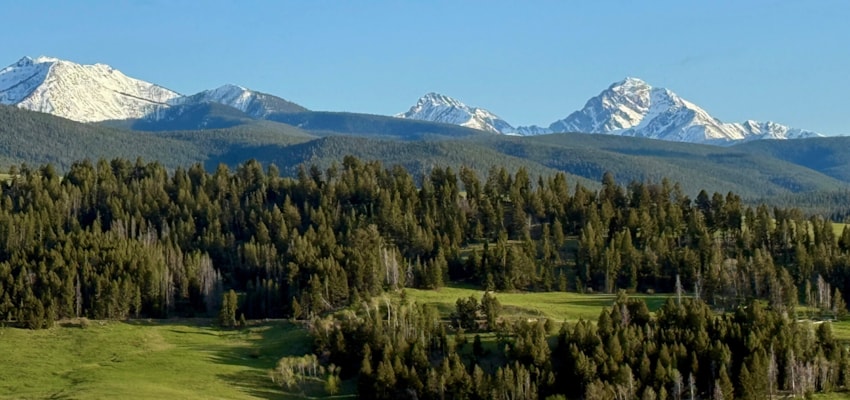
Located in the high-altitude pass between Montana and Idaho, Monida is a small forgotten town with a rich history tied to the expansion of the American West. Though its present state is little more than a few scattered buildings and remnants of a once-thriving town, Monida played a significant role in transportation, commerce, and early tourism to Yellowstone National Park.
Monida is a combination of “Montana” and “Idaho,” reflecting its strategic location on the border of the two states. It was established in the late 19th century as a railroad stop along the Utah and Northern Railway, a subsidiary of the Union Pacific Railroad. The golden spike that marked the railroad making it o Montana is on the border of the two states.
At an elevation of about 6,800 feet, Monida Pass became a key transportation route, particularly for stagecoaches and early automobiles traveling to Yellowstone National Park.
Monida flourished in the early 1900s, thanks to its role as a staging point for tourists heading to Yellowstone. Before rail lines reached closer to the park, travelers would disembark at Monida and continue their journey by stagecoach. This influx of visitors led to the growth of hotels, stables, and supply stores. Ranching also played a role in the local economy, with cattle grazing in the surrounding Centennial Valley.
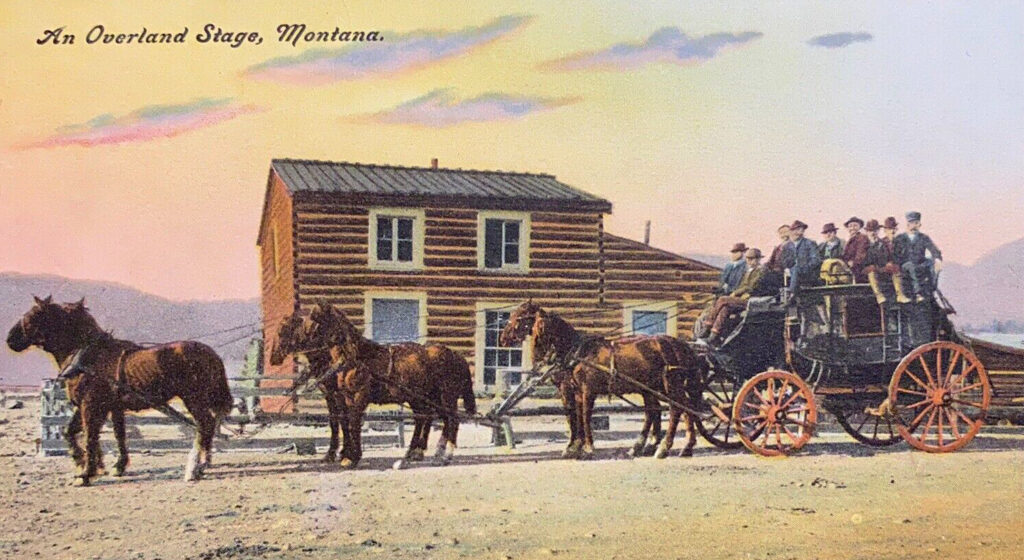
The town’s heyday coincided with the golden age of rail travel. However, as more direct routes to Yellowstone were developed, Monida’s importance declined. By the 1910s, better transportation infrastructure bypassed the town, leading to a slow economic downturn.
By the mid-20th century, Monida had become a shadow of its former self. The decline of the railroad industry, combined with improved automobile travel routes, made the town largely obsolete. Businesses closed, families moved away, and what was once a bustling hub became a near ghost town.
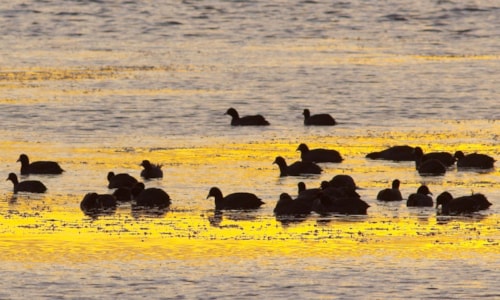
Today, Monida stands as a testament to the fleeting nature of frontier settlements. However, it still holds historical and ecological significance. The nearby Centennial Valley remains an important area for conservation, home to diverse wildlife and natural beauty. The town itself serves as a reminder of the pioneering spirit that shaped the American West.
For travelers passing through, Monida offers a glimpse into the past, a quiet crossroads where Montana and Idaho meet, and ample opportunity to explore the surrounding Centennial Range. Lima just to the north offers lodging, supplies and meals.