


Ruby Peak
Highest Peak in the Ruby Mountains
By Elanor Kimble
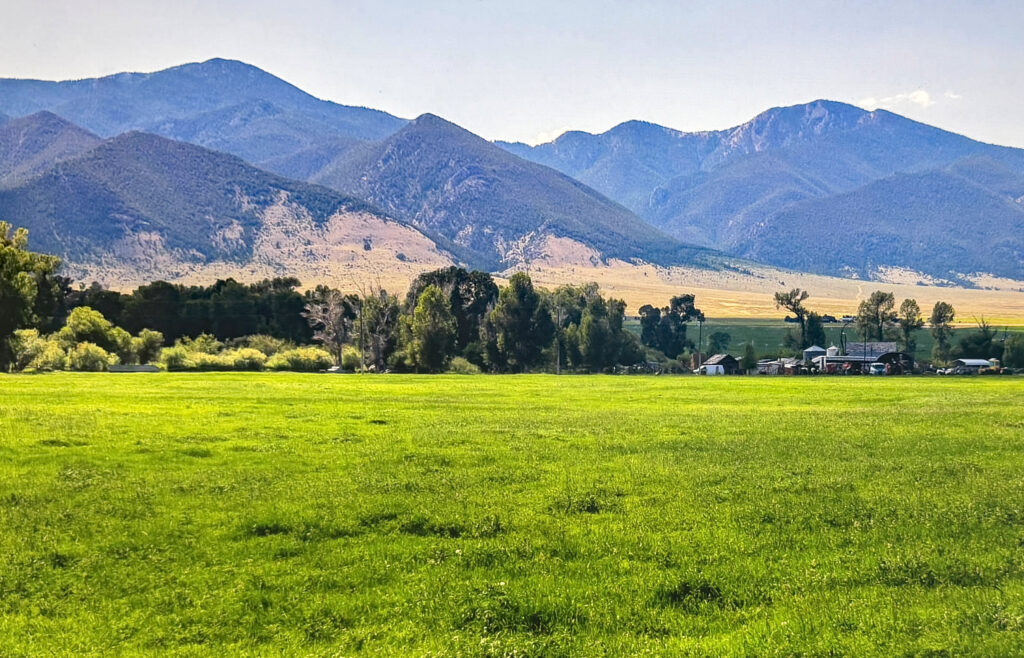
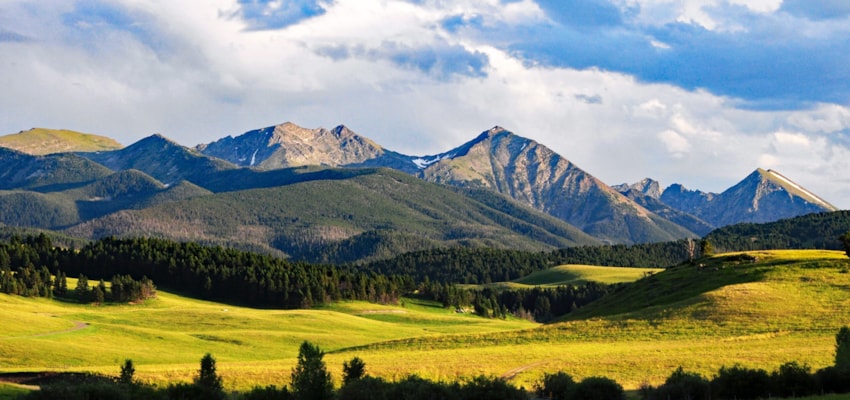
Ruby Peak, 9,391 ft, is in Southwest Montana’s Ruby Range east of Dillon. The closest towns with services are Alder, Laurin, and Sheridan. Most of the land is managed by the Bureau of Land Management and is designated as a Wilderness Study Area.
There is no official trailhead for Ruby Peak. Instead, the simplest way to get to the summit is to travel to the town of Alder from Highway 287, following signs to Ruby Dam. Head a short distance to the T on Upper Ruby Road (Highway 357). Drive approximately 1/4 mile, then turn right (west) onto Judy Lane. Follow this road (which becomes Spring Canyon Road) for about two miles.
Just past Ewe Lane and right before Spring Canyon Road bends sharply south, turn right onto a dirt road heading toward the mountains. You will soon reach a gate leading to BLM land. Pass through the gate and continue driving for another mile or so until you reach a flat grassy area to park.
The trail is not clear, as it is two ATV tracks that can easily be lost in the grass or snow. After walking through this grassy area, you’ll enter Porier Canyon and start your ascent towards the mountain. After about two miles, the ATV tracks turn sharply to the west, and you should continue south and head up the ridge, which requires route-finding and bushwhacking in equal measure. Then follow the spur trail that parallels a gully to the left and follow it as far as it goes. At the end, you will need to scramble up a saddle to reach the summit itself.
In total, the round trip will take five to six hours. Because there is no defined trail, the hike requires off-trail segments for most of its length and should only be attempted by experienced trekkers.
For additional information, consult the book Peakbagging Montana by Cedron Jones and the website Nature’s Course article by Aaron Schye for detailed instructions on the route, in addition to directions and a KML file link.
The Ruby Range is mostly a complex of ancient metamorphic basement rocks that have been uplifted over time by tectonic forces and mountain-building events. There are also sections of far younger sedimentary rocks that contain iron deposits.