



Foraging Native Plants in Western Montana
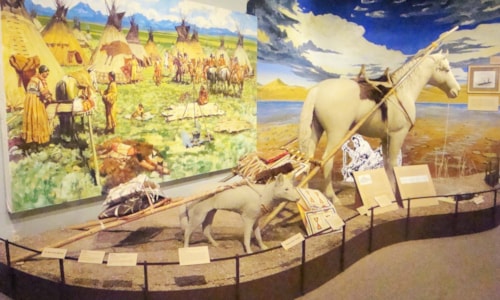
Whenever I find myself outdoors I always appreciate the plethora of flora that surrounds me, not only for its aesthetic value but also the possibility of a sustainable food source. There are things most people inherently know to be delicious, such as the famous huckleberry, but there are so many other plants that are not so well known. Some of these plants may not initially seem edible, however, with knowledge cultivated from native tribes such as the Salish, Kootenai, Pend d’Oreille, and Shoshone they can be prepared and enjoyed throughout the year. Many of these plants are harvested in the summer and autumn and processed for use over the cold months until spring. Even in a frigid Montana winter, if you know where to look and have the patience to prepare them correctly, the chill may be staved off with a feast of foraged foods.
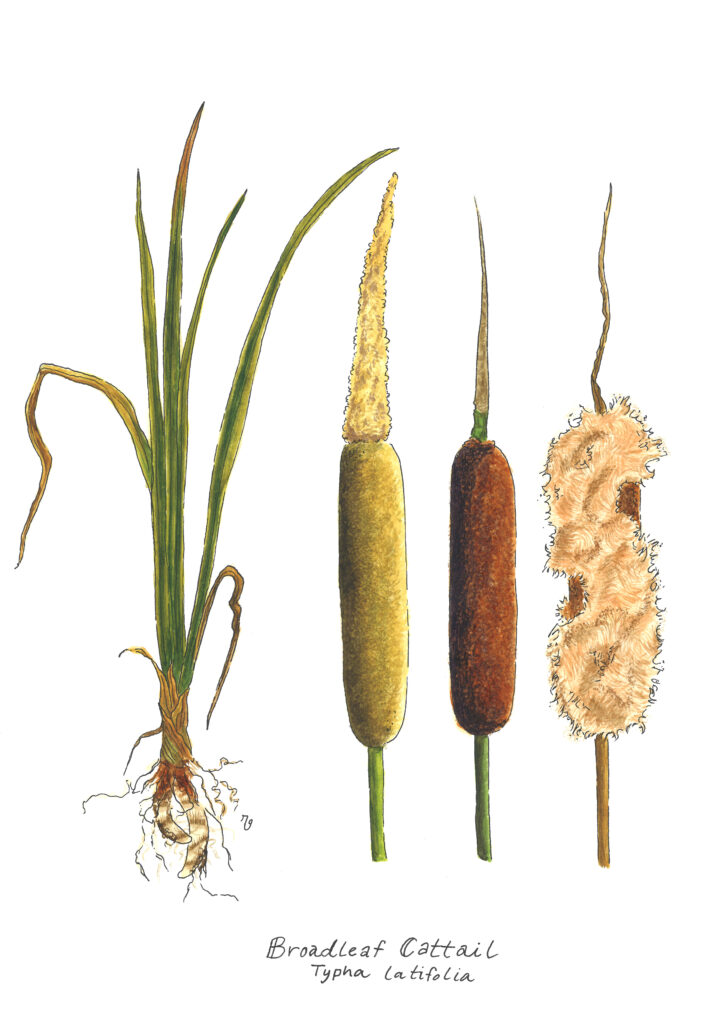
Broadleaf Cattail
Typha latifolia
The cattail is commonly found in marshes and along the banks of slow-moving water bodies across Montana. Their distinct blade-like leaves and stiff flowering stalks make them easily identifiable. In the winter, the green canes turn a tan color, but it is not long before young shoots begin poking through the ground in May. Nearly every part of the plant is edible, so harvesting depends on the season. Young shoot\s require cooking to make them tender, similar to asparagus, while the stems and leaves can be eaten raw or boiled. In the summer the young flowers can be boiled and eaten like corn on the cob, and the yellow pollen from male flowers is often added to pancakes or breads like flour. The roots are harder to scrounge up but should be cleaned and cooked to your preference and can even be dried and ground into another kind of flour. These are best harvested in the late summer or fall when there is less potential for ice to form and make them harder to access.
Common Camas
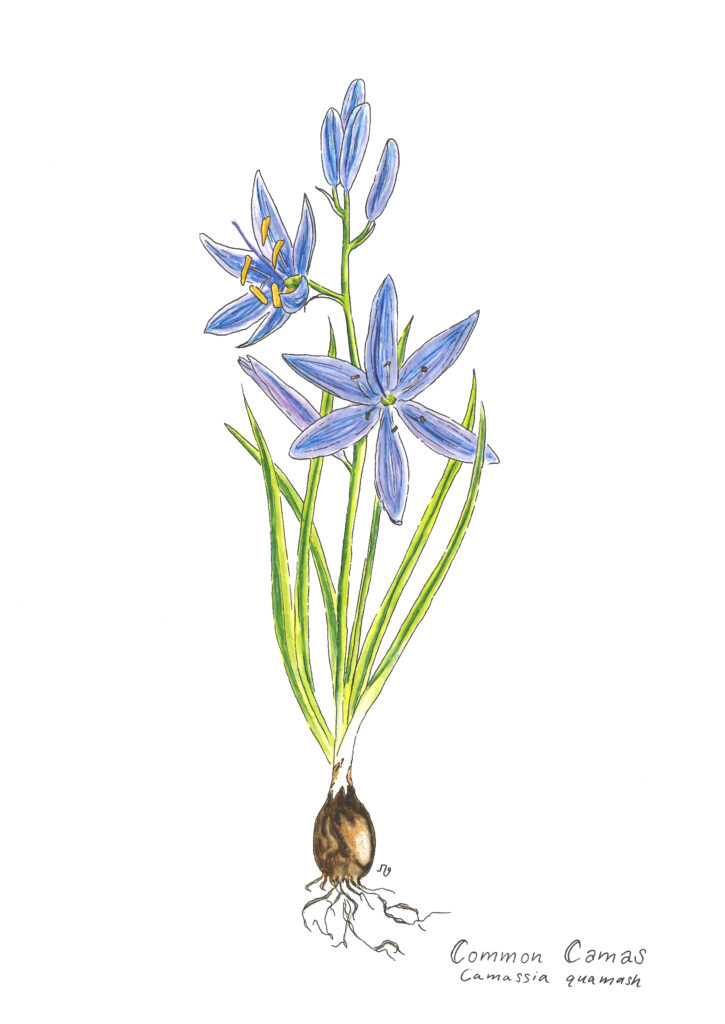
Camassia quamash
Camas is a member of the lily family and is cherished among the Salish, Shoshone, and Nez Perce for its hearty roots. These bulbs are harvested from April to June when the loose clusters with six purple-blue petals and yellow or red anthers are visible. It is paramount to collect them when the flowers are in bloom due to the leaves and bulbs’ resemblance to a toxic relative known as the death camas that grow in the same prairies, though they have tightly clustered white flowers. The bulbs have a similar texture and color to onions after the brown outer skin is peeled off. They are edible when raw, but due to high levels of inulin they are gummy with a soap-like flavor, so cooking is advised to break this down into fructose. Any method of cooking is welcome, but a slow roast will guarantee a sweeter result. They were often used in place of sugar to sweeten other foods and be made into cakes, taking on a taste similar to baked pears. They can also be preserved for later use either by drying or freezing. It is because of this that they were a key food source for the members of the Lewis and Clark Expedition, in dire times it was their sole food source. Many native tribes would cultivate camas prairies over many seasons by maintaining them through weeding, burning, and soil aeration among other traditional techniques. At one time there were many such prairies, but they have become rare over the years as western agriculture has taken over much of the west’s landscape.
Glacier Lily
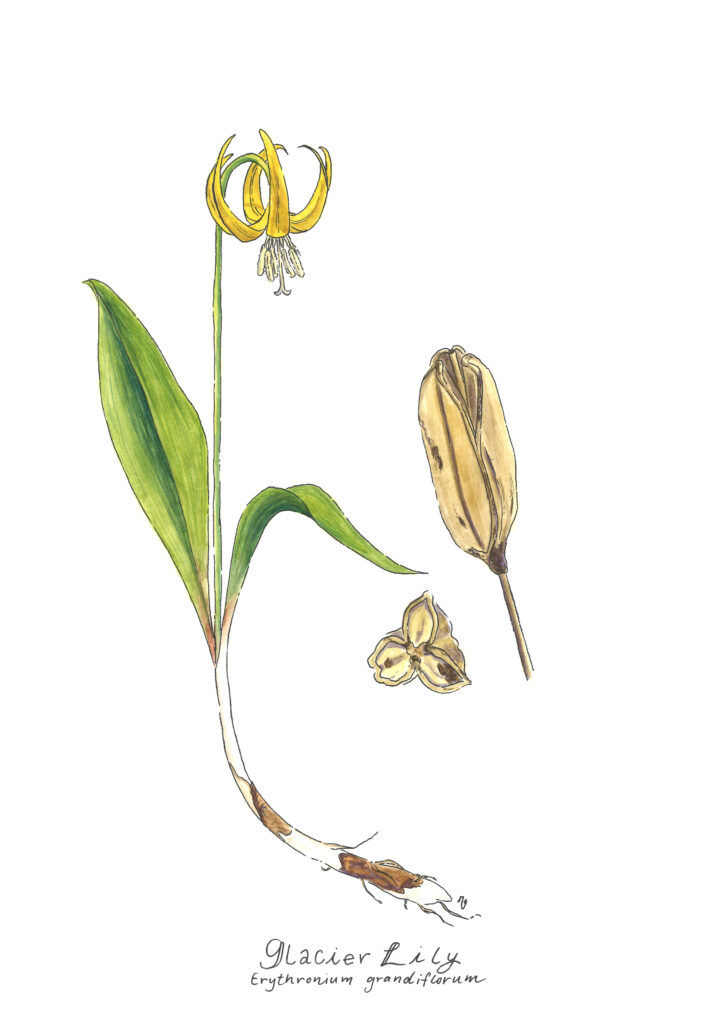
Erythronium grandiflorum
When hiking in montane and subalpine areas between May and August, you may encounter this beautiful yellow wildflower. A single stalk grows from two wide basal leaves and sports a star-shaped flower with yellow or red anthers and six petals that tend to nod or fall over. Their corms, similar to camas bulbs, can be eaten fresh or cooked for a sweeter roasted taste. The Blackfeet tended to put them in soups and they were an essential trade item between tribes. The leaves can also be eaten, and the cooked seed pods are similar to green beans. It is important to note that these plants are a vital food source for the grizzly bear, who dig up the bulb in the early spring before food becomes plentiful again. The plant is a perennial herb that lies dormant over winter like a tulip before blooming after winter snows melt away. Their seeds also need nearly a hundred days of cold before germination is possible, meaning it may take years for individuals to reach maturity, so be prudent if you deem trying them for yourself so they may be saved for future generations to enjoy.
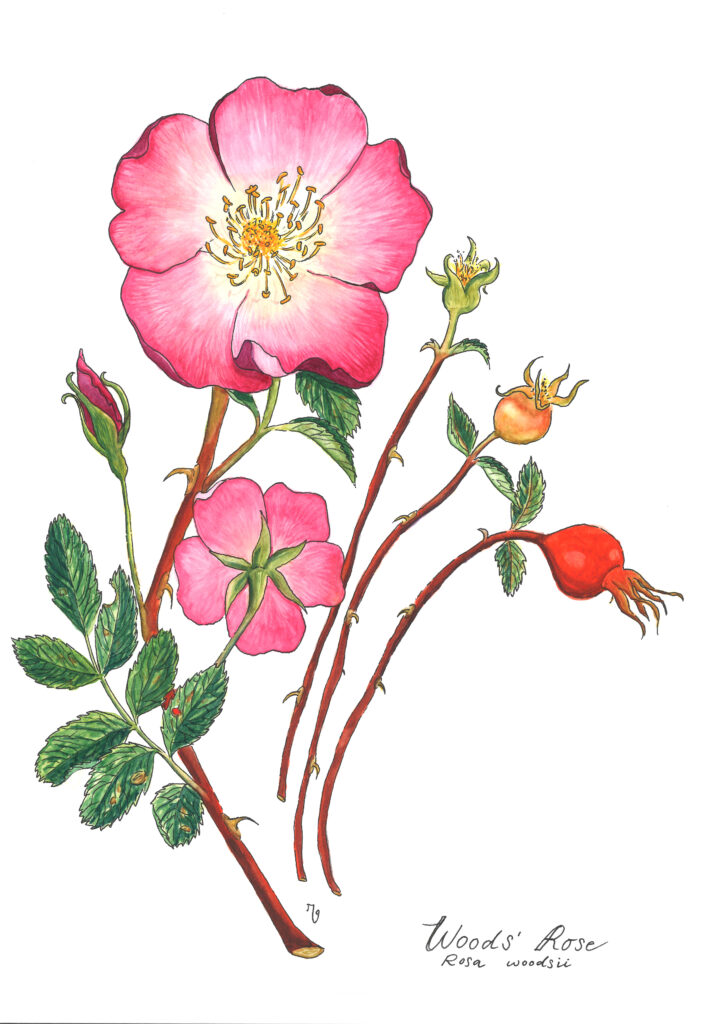
Woods’ Rose
Rosa woodsii
Another late fall and early winter plant found all over Montana is the woods’ rose, commonly known as the wild rose. It grows in a variety of habitats, from low-elevation woodlands and riparian areas to high steppes and montane habitats. In the spring, the perennial species produces radial pink flowers with a yellow center and toothed, pinnately compound leaves that can persist into winter. The stalks display alternate branching and are covered in prickly thorns. In the autumn the flowers give way to fruits, known as hips, which should be harvested once they are a bright crimson color. They can then be dried and steeped in tea, made into jelly, and mixed into cakes or even pudding. They are very high in antioxidants and vitamin C and have a tart, almost citrus-like taste with floral undertones, just be sure to be aware of small seeds.
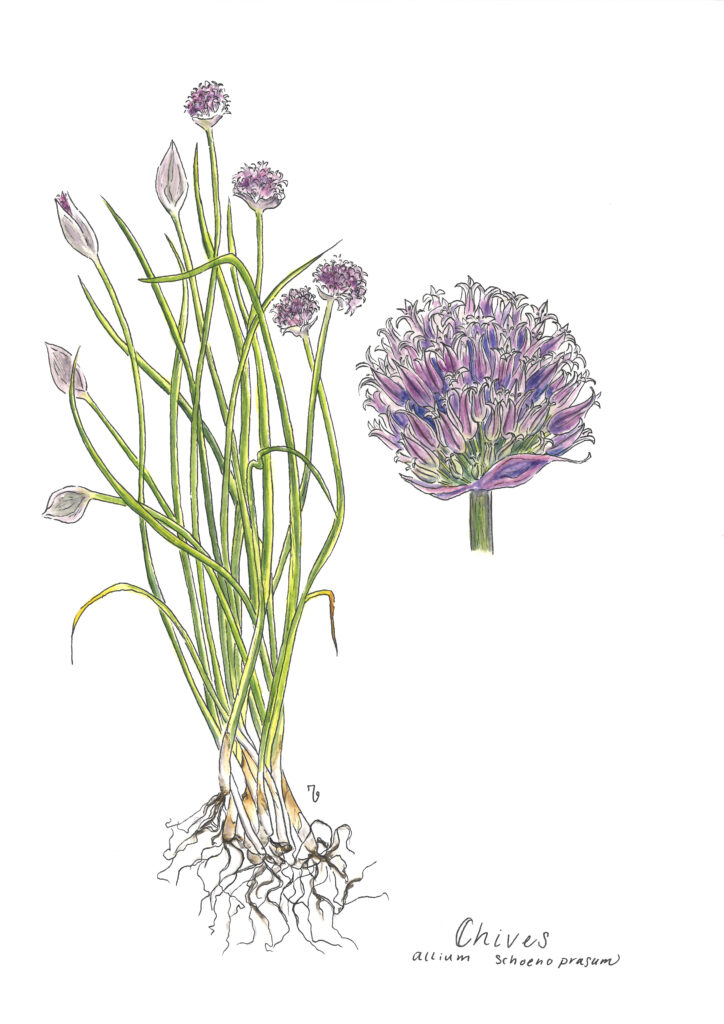
Wild Chive
Allium schoenoprasum
Wild chives are not to be confused with edible wild onions, which grow largely east of the divide and have white flowers. The bright magenta clustered flowers of chives can be spotted hugging the banks of rivers and wet meadows and are often growing in patches between craggy rocks. Both the hollow stems and flowers are edible, and have the scent and taste of onion. They make an excellent seasoning for trout or an addition to a salad. Moreover, the flowers can be battered in light flour and fried in a fashion similar to onion rings. The native Americans observed their antiseptic quality by crushing bulbs to treat minor injuries and even coughs. They begin to bloom in June and continue through the summer into early September, and while the flower and stems do not last much longer past that, the bulbs can be collected and dried for use later in the year.
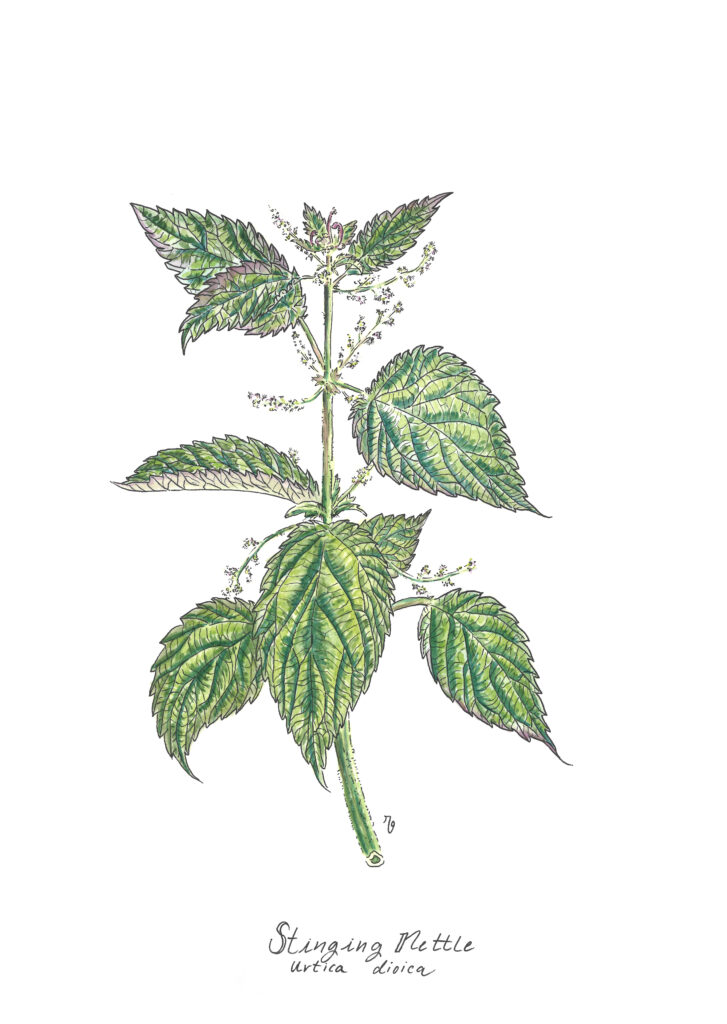
Stinging Nettle
Urtica dioica
Often seen as a painful annoyance when venturing into the woods, nettles are more than just their irritating reputation. If you take caution to avoid touching the herb, which contains tiny hairs called trichomes that house the chemicals your skin reacts to, everything from the root to the seeds is edible. Wear a long-sleeved shirt, pants, and gloves to collect leaves around three inches wide or less from plants that have yet to flower. They are found from June to September in the moist, disturbed soils of meadows, open forests, and valleys depending on the year and conditions. It is best to gather them earlier in the season when the shoots are still young and tender and haven’t taken on a bitter taste. The leaves and shoots must then be blanched, dried, or frozen to remove the trichomes before they can be added to food. After this process, the culinary opportunities are endless. Use freshly blanched leaves in substitution of spinach, kale, or basil to make a paste akin to pesto, add them to salad for a fresh, slightly bitter bite, or stir them into soup for added nutritional value as they are high in fiber, calcium, and manganese.
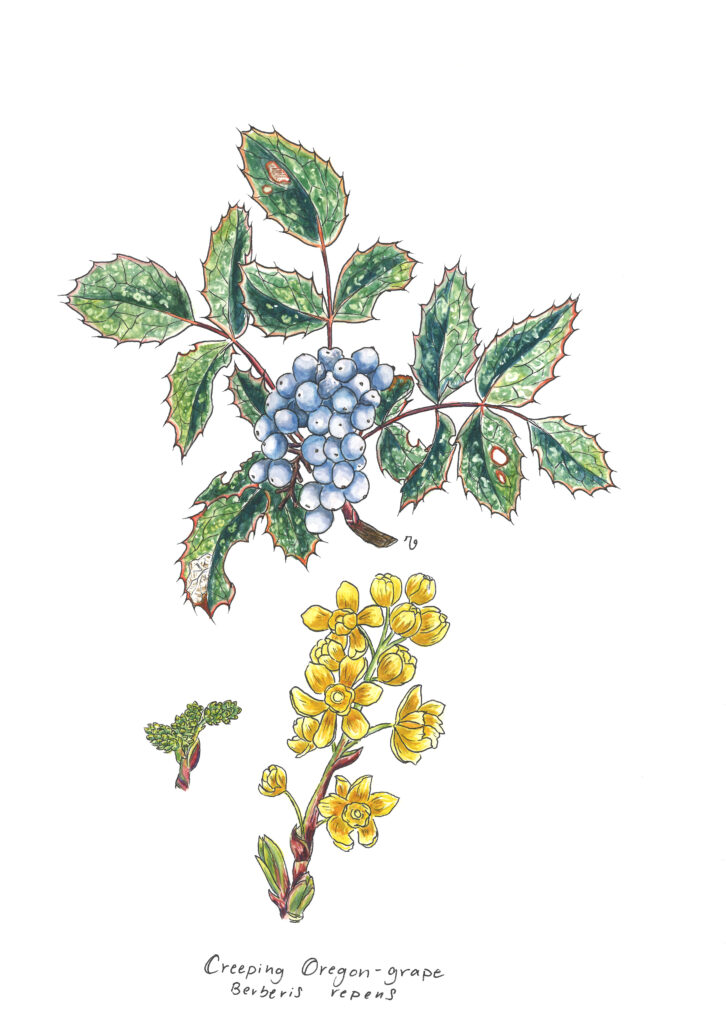
Creeping Oregon-grape
Berberis repens / Mahonia repens
Despite the name, Oregon grapes can be found from Alaska to New Mexico. They are distinguishable by their holly-like leaves and waxy berries. There are a few varieties in Montana, including the more shiny and prickly Tall Oregon grape, but the Creeping Oregon grape is the most prolific across much of the state. It is a shorter shrub that spreads from lower foothills to forested slopes and prefers moisture but is drought tolerant, making it very versatile. This evergreen plant typically gains orange to red splotches on its leaves that give way to a deeper red by autumn until summer comes, turning them back to green. From spring to early summer, the shrub produces bright yellow clustered flowers that attract pollinators with their honeyed scent. These give way to closely clustered berries or “grapes” from September through October that are round to oblong in shape and dusky blue covered in a waxy sheen. They can be eaten raw but are very sour and contain many small seeds, so they are best when added with other fruits in recipes or sweetened with sugar. Jelly, jam, and even wine are popular options. Both roots and berries have been used for their medicinal and pigment properties, and are often harvested in autumn and dried for later use.
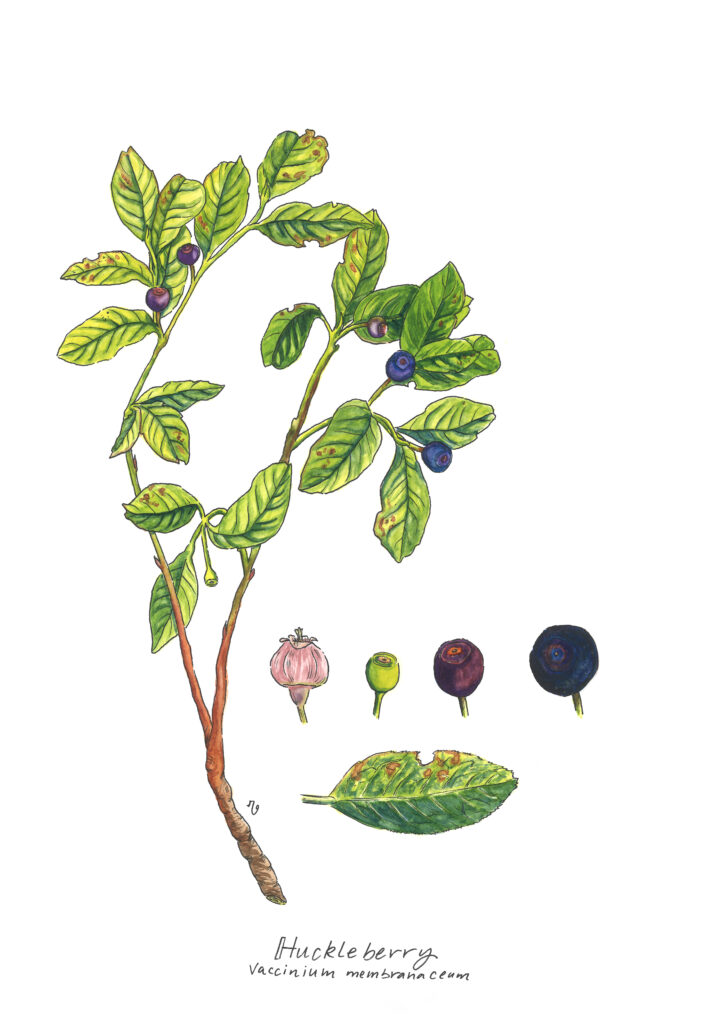
Huckleberry
Vaccinium membranaceum
Of course, a guide to edible plants in Montana wouldn’t be complete without the humble huckleberry. Despite its renowned reputation as Montana’s state fruit, with millions of products sold to eager tourists and locals alike, its growing period is quite short. Berries are only ripe for a few weeks in July and August and can be found in the underbrush of Subalpine forests dominated by fir and pine trees. The taste has been described as a cross between a cranberry and a blueberry, though the sweetness is dependent on ripeness, so be sure to pick berries when they are a deep purple or blue hue. Be sure to distinguish them from the false huckleberry which has very similar-looking leaves but coppery-pink globose flowers in early summer, similar to the huckleberry’s flower, though more elongated. Pick from multiple bushes and be aware of wildlife, especially bears, who enjoy their taste as much as we do. They make an excellent trail snack but have also been dried in the sun for consumption in winter by native tribes. They are not only delicious, but rich in antioxidants, Vitamin C, Vitamin B, and potassium. Freezing is also a popular option to enjoy their flavor year-round. Once painstakingly obtained, or purchased for a steep price, the culinary opportunities are endless. Anything from pie, jam, syrup, ice cream, candy, and even meat sticks can be made with this little berry.
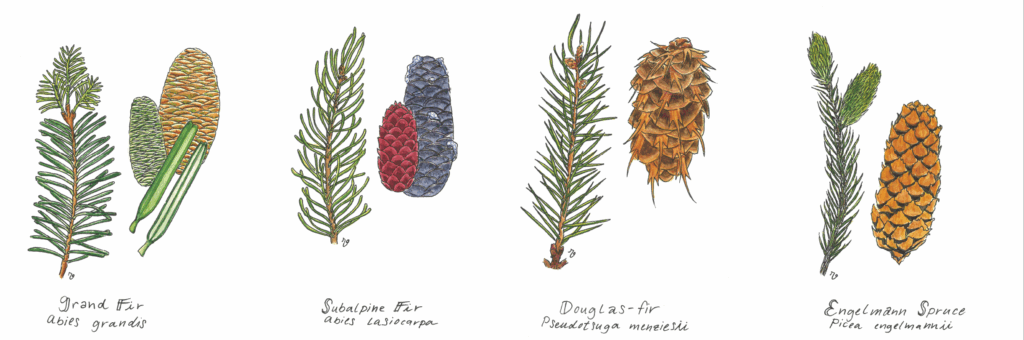
Conifers
Multiple Species
Coniferous trees are a dominant plant of the gymnosperm group that can be found across Montana’s landscape. Because each species in this division is very similar from a foraging perspective, it is hard to select just one to identify and define. Among the most common in western Montana are the Grand, Sub-alpine, and Douglas Fir, and the Engelmann Spruce. There are many uses for them, but some of the best come from the needles and the nuts of these plants. Spruces and firs contain nuts that are easy to harvest in September and October. Though they are relatively small compared to the pinyon pine, which is most well-known for its expensive nuts, they are nonetheless a nourishing alternative. The larger cones you generally see are the female reproductive organ of the tree, whereas it is unlikely you have noticed the male cones, which are much smaller and simply release pollen; both genders are found on individual trees as most conifers are monoecious.You can find the female cones after they fall to the ground or collect them prematurely on the tree and allow them to open and reveal seeds in a warm, dark place, avoiding competition with squirrels and birds. Place them next to a campfire and watch as they open and release their seeds, which can be optionally toasted for a smoky flavor. They not only serve as a great source of protein but are also high in thiamine, Vitamin K, and magnesium. Pine needles are high in vitamins A and C, and by steeping the needles in water a tea with a slight sweet citrus taste can be enjoyed. In spring new needles called tips are especially sought after for their bright citrus and piney notes, and are often mixed into jelly, syrup, salt, or tea. In dire times, it is also possible to cut away the outer bark and scrape thin sheets off the inner bark before boiling and consuming it. It is important to note that the needles and bark of ponderosa pine are not edible, and could be toxic if eaten. This species is distinct with its rusty-orange bark that is pieced together in large puzzle-like pieces and tri-bundled evergreen needles 4-8 inches long. The seeds can still be eaten raw or even made into flour for bread like other species. Pacific Yew is another native conifer that is highly toxic if any part is eaten. They prefer moist environments and usually do not grow as tall as their edible cousins; it is more likely they will be shrub-like if encountered. They are recognizable by their bright red berry-like arils and needles similar to grand pine and hemlock, though they are more broad and leaf-like with pointed tips and uniform green undersides.
Though the species detailed above are just a few of the many plants that can be enjoyed in Montana, I hope to have provided a guide for anyone to forage enough food to make a nutritious meal any time of year. At the very least, I have learned much more about the plant world around me, and the next time I find myself in nature I will be able to recognize these plants and hope that through the knowledge of those who came before me, I would be able to survive for at least a few days in the wilderness.